How to spot fake Air Jordan 1s: The tell-tale signs
A half-price pair catching your eye on a resale platform, and that little voice: too good to be true? Often, yes. Counterfeit sneakers have become so good that the naked eye is no longer always enough. But fake factories almost always mess up in the same places, because these details are expensive to copy properly.
To recognize a fake Air Jordan 1, four clues solve 90% of cases: a fully visible interior size tag (on a real one, it's half hidden by the lining), a serial number that doesn't match between the box and the shoe, an overly thick or misplaced Swoosh, and a price that's suspiciously low. Any one of these signals? Be suspicious. We'll go through everything, from the logo to the sole.
To check in 30 seconds
-
The size tag: half under the lining on a real one, fully exposed on a fake.
-
The serial number: 9 digits, identical on the box and in the shoe. Otherwise, it's a fake.
-
The price: a real Air Jordan 1 is worth about €100. Below €50, run.
-
The leather: soft and slightly irregular on an authentic one. Plastic and rigid on a copy.
The 8 checkpoints to authenticate a pair
Pass each suspicious pair through this list. The more boxes that don't check out, the higher the risk of encountering a fake Air Jordan 1:
-
The inner tag: on an authentic pair, the size tag is neatly sewn and partially hidden by the black lining. On a fake, it's often exposed and misaligned.
-
The serial number: the 9-digit SKU code must be identical between the box label and the one inside the shoe. Two different codes, and it's a goner.
-
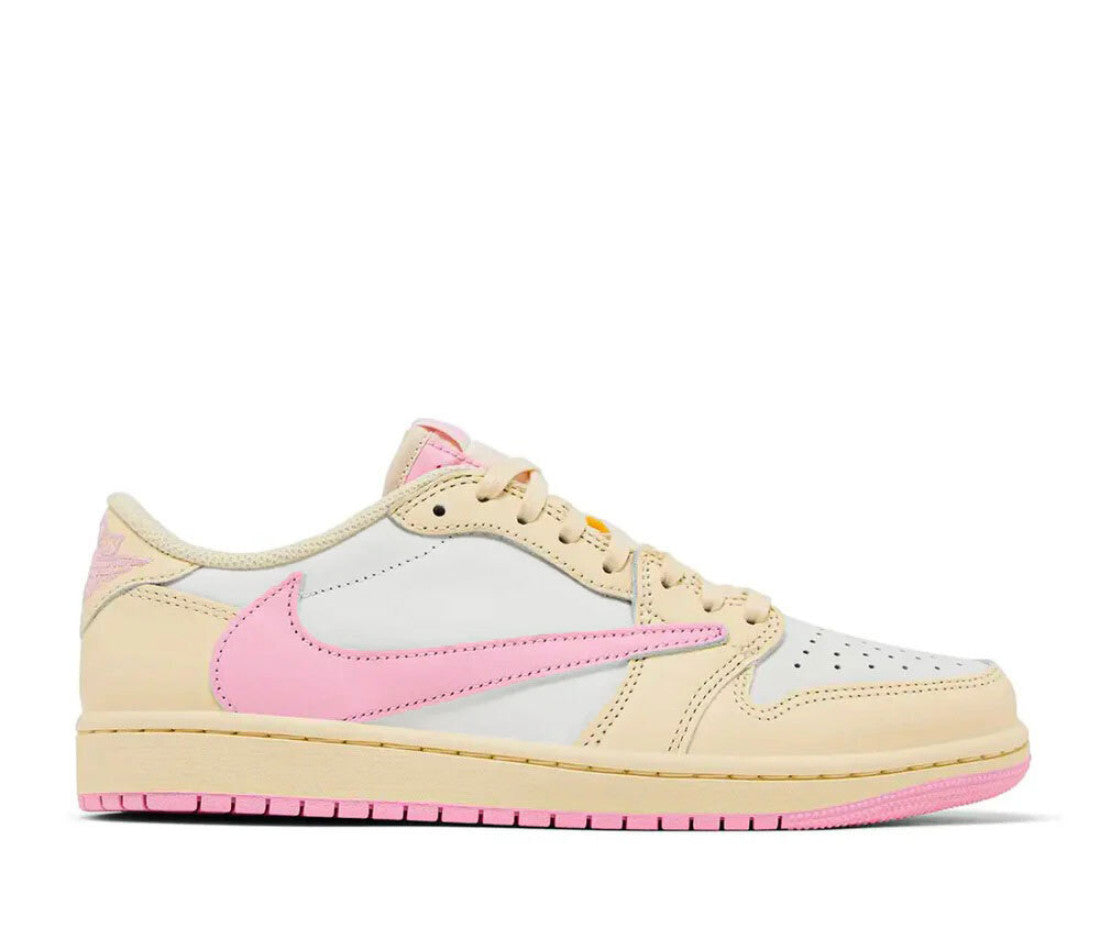
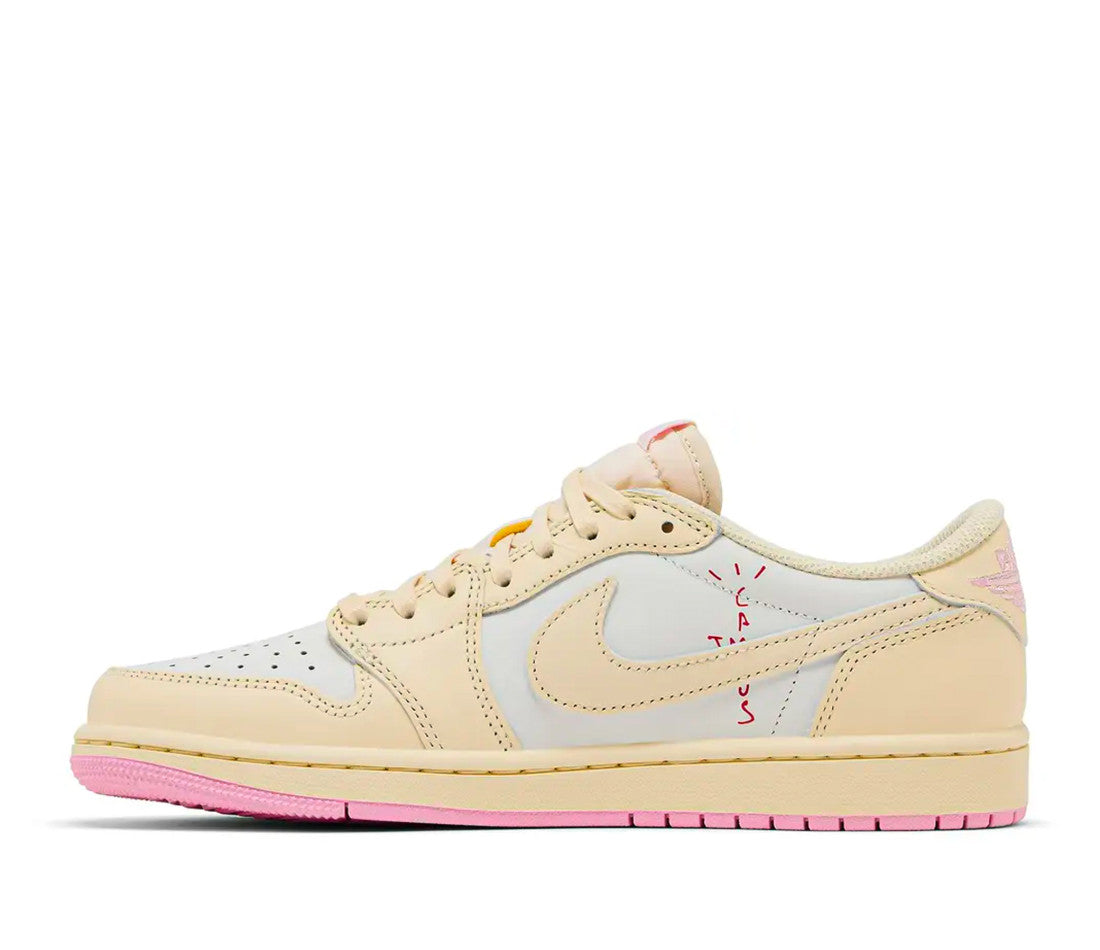
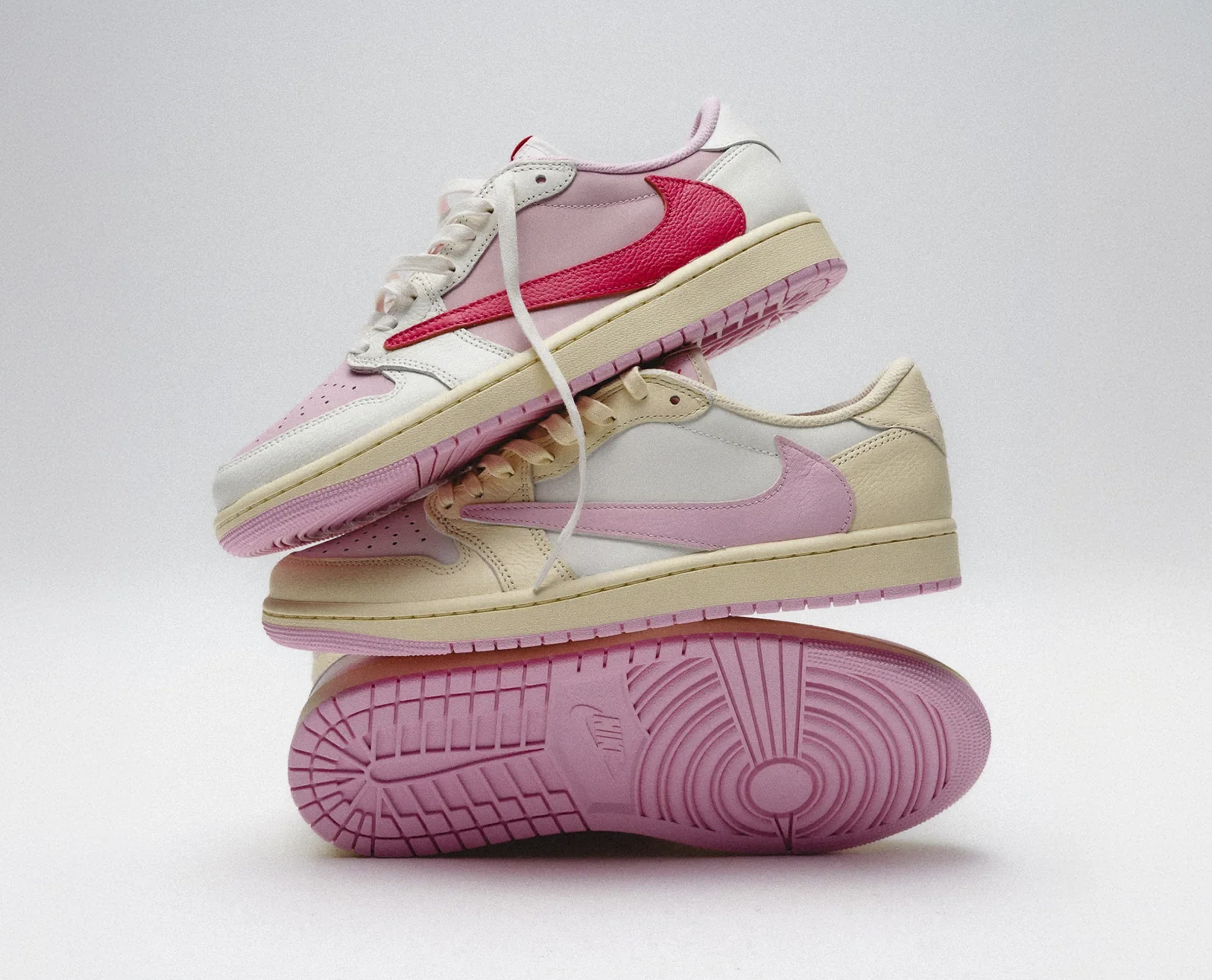
The Swoosh: clean, regular, placed just in front of the seam. On fakes, it's too thick, too far back, or asymmetrical from one foot to the other.
-
The Wings logo: a fine and precise engraving on a real one. Thicker and coarser on a copy.
-
The leather: real leather has natural irregularities and softens with time. Fake leather feels plastic and remains stiff.
-
The stitching: regular and well-spaced on the original. Irregular, with threads sticking out, on the counterfeit.
-
The sole: small raised stars and finely drawn grooves on a real one. Fakes simplify or exaggerate the relief.
-
The heel: a real one has an hourglass silhouette, narrower in the middle. A fake is often too wide and straight in that area.
Real or fake: the glaring differences
To quickly compare your pair, here are the most striking differences between an authentic Air Jordan 1 and a counterfeit:
|
Detail |
Real Air Jordan 1 |
Fake |
|
Size tag |
Half-hidden by lining |
Fully visible, poorly stitched |
|
Serial number (SKU) |
9 digits, identical box and shoe |
Different or missing codes |
|
Swoosh |
Thin, clean, in front of the seam |
Thick, misplaced, asymmetrical |
|
Leather |
Supple, natural irregularities |
Smooth, plastic, rigid |
|
Heel |
Distinct hourglass shape |
Wide and straight |
|
Box |
Thick cardboard, crisp print |
Thin cardboard, faded colors |
|
Price |
Around €100 |
Often under €50 |
The price: the clue before even touching the pair
A new Air Jordan 1 at the official price is around €100, and rarely drops below €50 when the model is recent and authentic. An ad selling you an "original" pair for €40 or €50? It's almost always a fake. The counterfeiter has no reason to respect the market value. That's why the price often remains the most reliable signal, even before you have the shoe in hand.
The same logic applies to sellers who display an "unlimited" stock of rare colorways or highly sought-after collaborations. A limited edition is by definition limited. A site that always has hundreds of them is selling fakes, period.
The box and label, don't overlook them
The box is the inspection area everyone neglects. On a real one, the cardboard is thick and rigid, the colors are bright, and the logo print is crisp. A fake quickly reveals thinner cardboard, faded colors, and slightly blurry text. The detail that counterfeiters most often botch: the label must be perfectly glued and legible, with no spelling mistakes or crooked text, and its font must be identical to that of the shoe's inner label.
Then, transfer the model code from the box to the shoe's inner label. Both must match exactly. This is the quickest cross-check, and the hardest to fake properly.
Where to buy for peace of mind
The easiest way to avoid a fake pair is to buy from the right place: the official Nike website, brand stores, or authorized and recognized resellers. In the second-hand market, favor platforms that authenticate each pair before shipping, where an expert checks the merchandise. This is the whole point of going through a verified selection like our Air Jordan 1 Low and Air Jordan 1 High, checked before shipping.
Doubting a pair you already own? Compare every detail to the official photos of the colorway on the Nike website, in high definition. Sneaker communities and "legit check" apps can also help you get a pair validated by enthusiasts who know the specific pitfalls of each model.
Our verification method
We built this checklist by cross-referencing authentication points cited by several specialized guides and "legit check" checklists from sneaker communities, keeping only what appears in multiple sources. An important point: no isolated criterion condemns a pair. It's the accumulation of signals that determines the verdict. And when doubt persists, nothing beats a direct comparison with official photos of the colorway, or the opinion of a professional authentication service.
Your questions about fake Jordans
How do I know if Air Jordan 1s are real?
Check the inner tag (half-hidden by the lining on a real one), compare the 9-digit serial number between the box and the shoe, assess the finesse of the Swoosh and Wings logo, and feel the leather: supple and irregular on an authentic pair, plasticized on a fake.
How to check the authenticity of a pair of Jordans?
Cross-reference several clues rather than just one: identical SKU code on the box and shoe, quality of stitching, hourglass heel, consistent price (around €100), and purchase from an authorized seller. One suspicious detail calls for caution. Two or more, it's very likely a counterfeit.
Does a low price always mean fake Jordans?
Not systematically, but it's a big signal. A real Air Jordan 1 rarely drops below €50. Below that, for a pair advertised as new and original, the risk of it being fake is enormous.
You now know how to spot a fake pair. For stress-free shopping, browse our selection of authenticated Air Jordans, and keep the same critical eye before falling for a Nike Air Force 1.
Bestsellers